

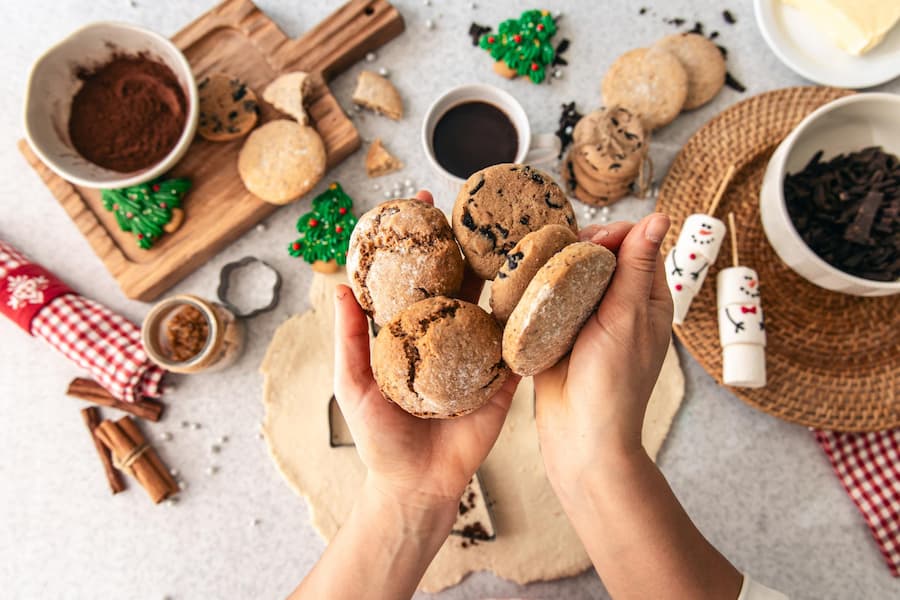
Countless home baking excursions are founded on cookie dough, the magical, pliable bedrock. More than merely a blend of components, it’s an amazing interaction of chemistry and skill that shapes everything from texture and spread to final taste. Knowing how its ingredients interact with the structural role of flour, the creaming of fats and sugars, and the binding power of eggs gives the home baker the ability to go beyond recipes into the sphere of assured inventiveness.

This guide looks at the scientific and artistic aspects of cookie dough and provides useful ideas on how to perfect classics and invent fresh treats. For those looking for immediate inspiration, sourcing excellent cookie dough near me offers a practical, professional-grade beginning for creative customisation and spontaneous baking pleasure.
Eight Important Tips for Successful Home Baking
Creaming’s Science
The first step of creaming, softening butter with sugar, sets the stage. This process involves small air bubbles in the fat; it is not only about mixing. These bubbles rise from heat and steam when baked to give a lighter, softer crumb and a beautifully crispy edge. Good creaming demands several minutes of beating until the combination becomes obviously lighter and fluffier, using room-temperature butter. Using caster sugar here helps with aeration and dissolution. Patience is essential at this critical stage since it decides the texture; rushing it will produce a thick, greasy cookie.
Flour power
Through the generation of gluten, flour offers the fundamental framework. For most cookies, plain flour is used as too much gluten development (stimulated by robust bread flour) produces toughness. Some recipes add cornflour to achieve a finer, crumblier texture. Consistency depends on the technique of measurement.
Use digital scales for accuracy. Should you use cups, spoon the flour into the cup and level it with a knife; never scoop straight from the bag as this compresses the flour and can result in a hard, dry dough.
White, Brown, and Alternative Sugars
Sugars Go Above And Beyond The Sweet. Granulated Or Caster White Sugar Encourages Spreading And Crispness. With Its Molasses Content, Brown Sugar (Light Or Dark Muscovado) Adds Chewiness, Wetness, And A Caramel-Like Flavour. Most Traditional Recipes Use A Mix For Balanced Flavour And Texture.
Consider Substitutes Such As Coconut Sugar For A Richer Note Or A Touch Of Honey For Improved Hygroscopicity, That Is, Moisture Retention. The Spread, Chew, And Colour Of The Cookie Are Directly Governed By The Kind And Proportion Of Sugars.
Perfect Binding And Leavening
The main binder, egg, also provides moisture and depth as they emulsify oils and liquids. The proteins in eggs give structure during baking. Large eggs are commonly employed. One extra yolk in some recipes gives the dough more richness. To combine smoothly into the creamed mixture and avoid curdling, eggs should ideally be at room temperature. In some recipes, such meringues-based cookies, the aeration ability of whipped egg whites becomes the main leavening agent, resulting in a light, airy texture.
Why Resting Dough is Non-Negotiable
One often missed but transforming action is chilling cookie dough. Refrigeration for at least thirty minutes, sometimes overnight enables the flour to completely hydrate, hence enhancing the intensity of the flavour. It also hardens the butter, which regulates spread during baking, therefore avoiding thin, oily puddles.
Frozen dough bakes up with sharper edges, chewy texture, and a larger, thicker appearance. For slice-and-bake types, sharp cuts depend on chilling. Superior texture and look come from this basic patience always.
Dynamics of Flavour and Mix-Ins
This is where personalisation really shines. Though chocolate chips are traditional, think about chopped toasted nuts, dried fruit, pretzel pieces, or spices such as cinnamon and cardamom. To prevent overworking the gluten, add mix-ins last and fold them in just until combined. The proportion is important; too many add-ins will make the cookie fall. Toast nuts and spices beforehand or use excellent vanilla extract or paste for a strong flavour. This phase turns simple dough into your trademark design.
Conclusion
Learning to make cookie dough is a satisfying trip into the core of home cooking. From scientific creaming to the essential chill, understanding the functional roles of every component and technique gives you the confidence to experiment and the control to create consistently flawless results.
Whether creating an enduring chocolate chip or developing a fresh flavour profile, this knowledge transforms the basic process of making cookies into a creative and highly fulfilling hobby. Great cookies start with great dough, therefore proving the wonderful cooperation between genuine creativity in the kitchen and thorough scientific study.
Visit Thefintechzoom for more informative blogs