

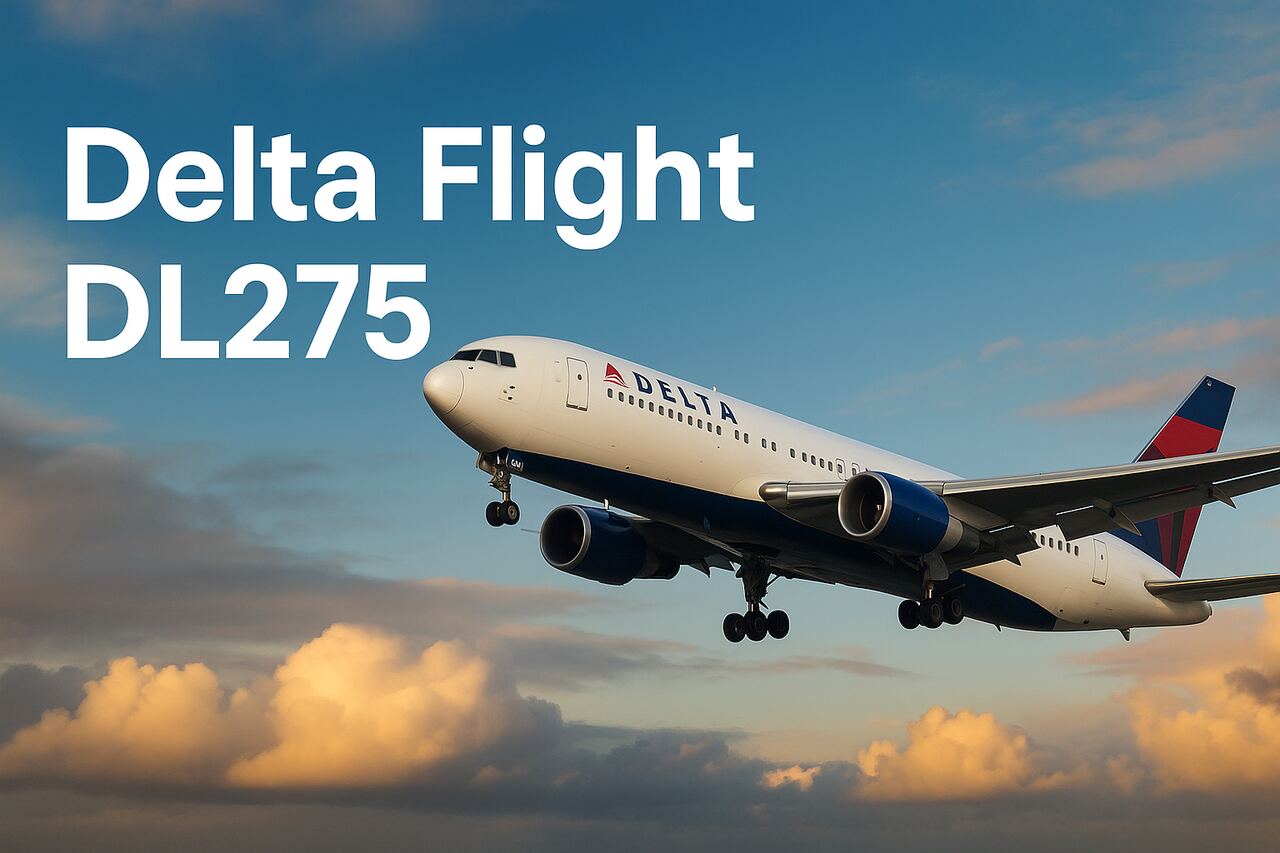
On a seemingly routine day in air travel, Delta Air Lines Flight DL275, a long-haul international route, became the focus of attention after an unexpected diversion to Los Angeles International Airport (LAX). What was planned as a continuous journey transformed into a multi-part odyssey for passengers and crew, highlighting the complex decision-making processes that ensure safety in modern aviation. This incident serves as a case study in how airlines manage unforeseen circumstances and prioritize passenger well-being above all else.

The Planned Route and the Unexpected Turn
Delta Flight DL275 is typically a scheduled service operating from an international origin to its final destination. While the specific origin can vary based on seasonal schedules, it is commonly a route from a major Asian or Pacific hub, such as Tokyo-Narita (NRT) or Seoul-Incheon (ICN), bound for a primary U.S. gateway like Seattle (SEA) or Detroit (DTW). On the day of the diversion, the aircraft, likely a wide-body Boeing 767 or Airbus A330, was proceeding normally over the vast expanse of the Pacific Ocean.
The decision to divert an aircraft hundreds of miles off course is never taken lightly. Captains and dispatchers weigh numerous factors, with passenger and crew safety as the uncompromising priority. In the case of DL275, the catalyst for the diversion was a declared medical emergency involving a passenger on board. A crew member alerted the flight deck that a traveler required immediate medical attention beyond the resources available in the air.
The cockpit crew, in constant contact with Delta’s global Operations Control Center in Atlanta, quickly assessed the situation. Given the aircraft’s position over the ocean, the nearest suitable major airport with full medical facilities and Delta ground support was Los Angeles International. LAX, as one of the world’s busiest airports, is equipped to handle such diversions with speed and efficiency. The captain made the command decision to alter course, informing air traffic control and beginning the descent towards Southern California.
The Diversion and Landing at LAX
The announcement to passengers would have been measured and professional, explaining the need to land early for a medical situation without causing undue alarm. The aircraft then began its approach into LAX. Los Angeles airport is a complex maze of runways and terminals, but it routinely accommodates diversions. Air traffic control would have worked to slot the arriving Delta wide-body into the flow of traffic, potentially requiring holding patterns.
Upon landing at LAX, the aircraft was met by emergency medical services (EMS) that were pre-alerted and waiting on the tarmac. Standard procedure in such events is to taxi to a designated remote gate or area to allow EMS personnel to board the aircraft quickly and discreetly evaluate and deplane the ailing passenger. This operation was carried out efficiently, minimizing disruption for other travelers while ensuring the individual received prompt care. The passenger was then transported to a local hospital for further treatment.
With the medical situation addressed, the flight now faced a new set of challenges. The diversion added several hours to the overall journey. Federal Aviation Regulations (FARs) strictly govern crew duty times to prevent fatigue. It was almost certain that the original flight crew had reached or were approaching their legal maximum duty period due to the extended flight time and the diversion process. They could not legally continue to operate the aircraft to its final destination.
READ ALSO: Nitri Tech Gloves and Why People Keep Using Them
The Ripple Effect: Crew Logistics and Passenger Care
This is where the logistical machinery of a major airline like Delta swings into action. Delta maintains crew bases and reserves of pilots and flight attendants at major hubs like LAX. The airline’s operations team immediately began working to source a fresh, rested crew to take over the aircraft. However, assembling a full long-haul crew, especially for a specific aircraft type, can take considerable time. Meanwhile, the aircraft itself needed to be serviced—refueled, catered, and cleaned—for the remaining leg of the journey.
For the passengers onboard, this meant an extended, unplanned layover at LAX. Delta gate agents and customer service representatives were dispatched to the gate to manage the situation. They provided regular updates, distributed meal vouchers for concessions within the airport, and began the arduous task of rebooking passengers with tight connections who had now missed their flights. For those whose final destination was LAX, the journey ended unexpectedly early, and arrangements for baggage and ground transportation had to be made.
The delay stretched into many hours as the airline worked through the complex logistics. Passengers were ultimately accommodated on the same aircraft once a new crew was assembled or, in some cases, rebooked onto other Delta flights later in the day. The original aircraft, now designated with a new flight number for the continuation leg (often something like DL275D to signify the diversion), eventually departed LAX for its original destination, completing a journey that was far longer than anyone had anticipated.
Conclusion: Safety as the Non-Negotiable Standard
The diversion of Delta Flight DL275 to LAX underscores a fundamental truth in aviation: safety protocols and passenger welfare will always supersede schedules and convenience. While immensely disruptive and frustrating for travelers, the sequence of events—from the in-flight emergency to the crew duty limitations—was managed according to strict, well-established procedures designed for exactly these scenarios.
For passengers, such an event is a test of patience, but it is also a demonstration of the extensive safety nets built into the air travel system. For Delta Air Lines, it was an operational challenge that tested their contingency planning and customer service response. Ultimately, the story of DL275 is not one of failure, but of a system functioning as intended, ensuring that a single medical emergency in the vastness of the sky could be addressed with the full resources of a major airport, reaffirming that the most important landing is a safe one.