

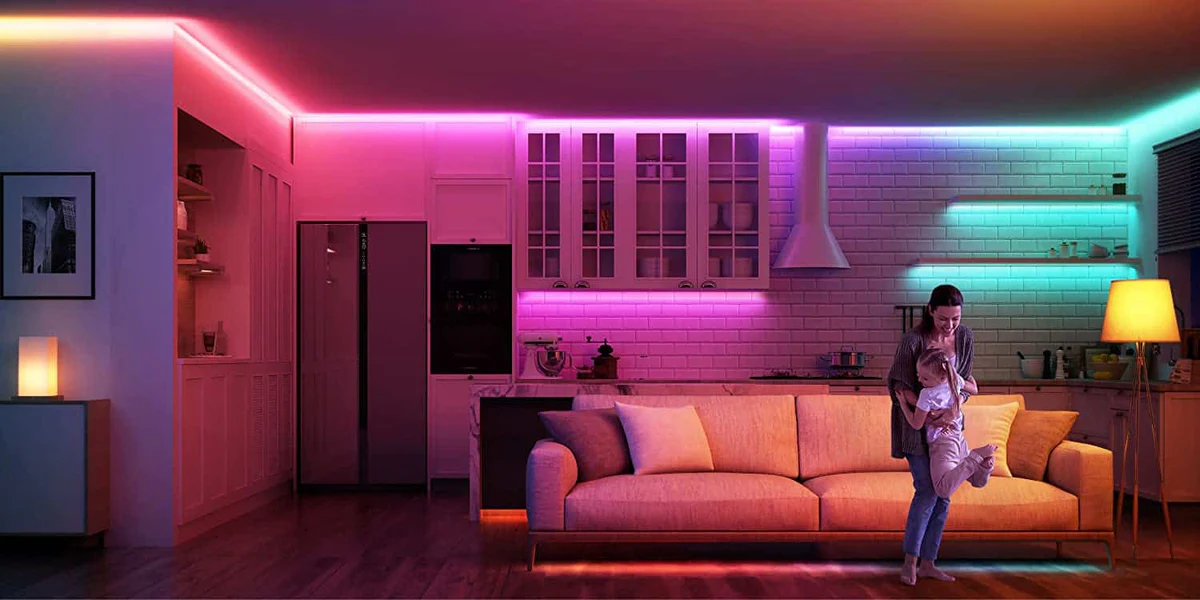
People don’t usually notice good lighting right away. What they notice is when a room feels off. Too sharp. Too dark in the corners. Flat. That’s usually when tape lighting enters the conversation.

I’ve worked with a lot of LED strips over the years, and most of them are forgettable in the worst way. They look fine in the box, then disappointing once installed. Uneven output. Visible dots. Light that feels cheap no matter how carefully you hide it.
Tech Lighting Essence Tape Light isn’t exciting in that way. It’s quiet. It does what it’s supposed to do, and then it gets out of the way.
What It Is Without the Marketing Layer
Essence Tape Light is a low-profile LED tape system meant to be concealed. Not partially hidden. Fully hidden. You’re not meant to see the strip or think about it once it’s installed.
It fits where normal fixtures don’t make sense. Under cabinets. Inside shelving. Behind trim. Along ceiling details. Places where you want light, not hardware.
Once it’s on, the space just feels more complete. That’s usually the reaction.
Read More : Editor Benjamin Tech Guru Keezy Co
Why This Tape Light Gets Specified Again
A lot of LED tape fails because of inconsistency. Bright spots. Color shifts. Sections that don’t match. That’s what gives tape lighting a bad reputation.
Tech Lighting Essence Tape Light avoids most of that. The output is even, especially when paired with proper channels and diffusers. Instead of seeing individual LEDs, you see a continuous line of light.
That difference matters more than people expect.
Another thing that matters is flexibility. Real spaces aren’t perfect. Cabinets vary. Walls aren’t always straight. This tape bends where it needs to and cuts cleanly where it should. That makes installations cleaner and less forced.
Where It Actually Makes Sense to Use It
Kitchens
Under-cabinet lighting is where Essence Tape Light does its best work. It puts light exactly where tasks happen. No shadows from overhead fixtures. No glare bouncing back into your eyes.
It also makes kitchens feel more intentional. Even during the day, when the lights aren’t doing much, the space feels finished.
Living rooms and bedrooms
In these spaces, the tape light usually stays indirect. Cove lighting. Behind headboards. Along built-ins.
It’s not meant to replace lamps or ceiling fixtures. It fills in the background so the room doesn’t feel empty at night. Subtle, but noticeable in the right way.
Commercial spaces
Retail and hospitality projects use this type of lighting constantly, even if customers never notice it. Shelves, displays, architectural lines—all of that benefits from even, hidden illumination.
When tape lighting is done well, people don’t comment on the lighting. They just feel comfortable in the space.
Installation Realities
This isn’t plug-and-play lighting. Planning matters. Measurements matter. Channels matter. When installed properly, Essence Tape Light stays quiet. No flicker. No buzzing. No constant adjustments.
It also works well with dimmers, which gives it flexibility throughout the day. Bright when needed. Soft when it’s not.
Power Use and Longevity
Efficiency is expected now, but longevity still gets overlooked. Hidden lighting is annoying to replace. Essence Tape Light is built to last, which is why it shows up in long-term projects.
Power use stays reasonable, even across long runs, and heat output is low enough that it doesn’t become a hidden problem later.
Read More Interesting Information about Redgifs Explained
Why Subtle Lighting Usually Wins
There’s a tendency to over-design lighting. Too many fixtures. Too many focal points. Too much brightness.
Tape lighting like this works because it doesn’t compete. It supports the room. It makes materials look better without calling attention to itself.
That’s usually the goal, even if people don’t say it out loud.
Final Thought
Tech Lighting Essence Tape Light isn’t interesting on its own. It’s useful. Reliable. Predictable in the best way.
Once it’s installed, you stop thinking about it. You just notice that the room feels right.
And in lighting, that’s usually the highest compliment there is.